If you’ve ever tried to shop for new window treatments, you’ve probably noticed that “blinds,” “shades,” and “shutters” get used interchangeably even though they’re three genuinely different products. Add in the local wrinkle where “shutter” often refers to something bolted to the outside of your house instead of hanging inside your window, and it’s easy to see why homeowners get confused before they’ve even started comparing prices.
Here’s a breakdown of what each product actually is, when each one is the right pick, and why one of the three means something different around here than it does elsewhere.
| Time to Read | About 8 to 10 minutes |
| What You’ll Learn | • The real difference between blinds, shades, and interior shutters
• Why “shutter” means something different around here • The six main types of exterior storm shutters and when each one fits • How to combine interior and exterior solutions in a coastal home |
| Next Steps | • Identify which windows in your home need storm protection
• Check what your insurance carrier will credit you for • Get a professional walk-through before you commit to a full property solution |
Blinds
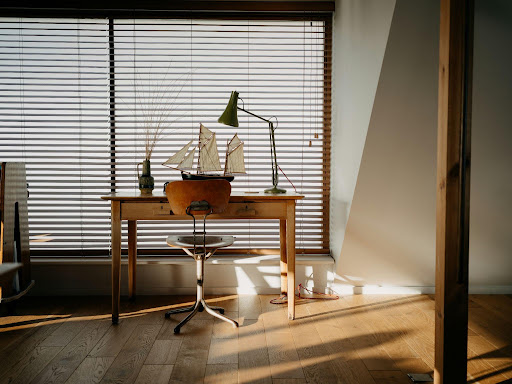
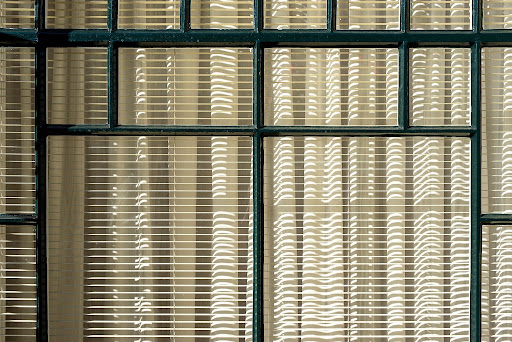
Blinds are hard slats, typically made of aluminum, faux wood, real wood, or vinyl, that tilt and lift with a cord or wand. The slats can be angled open or closed to control how much light enters the room, and the whole assembly raises up to clear the window entirely when you want it out of the way.
Blinds are the workhorse category. They’re generally the most affordable window treatment, they install easily, and they give you fast, precise control over light. The two most common styles you’ll see are horizontal blinds (mini blinds or Venetian style) and vertical blinds, which are usually reserved for sliding glass doors and wider windows.
Where blinds fall short: they collect dust in a humid climate, the cords can be a hazard around small children, and they don’t offer much in the way of insulation or true privacy when closed (light still leaks between slats). For a room where you want a softer look or better energy efficiency, blinds probably aren’t the answer.
Shades
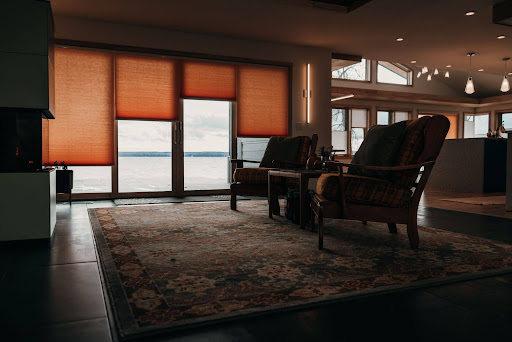
Shades are fabric-based window coverings that operate as a single piece. Instead of slats, you have a continuous panel that rolls, folds, or gathers as it raises. The most common types are roller shades (a simple flat panel), cellular or honeycomb shades (accordion-folded fabric with insulating air pockets), Roman shades (fabric that folds into pleats as it lifts), and solar shades (a mesh material designed to block UV while preserving the view).
Shades are the pick when you want a softer aesthetic or when energy efficiency matters. Cellular shades in particular can meaningfully reduce heat transfer through a window, which translates to lower cooling bills over the long summer months. Solar shades are popular in rooms with harsh western sun exposure because they cut glare without turning the room into a darkened cave.
The tradeoff with shades is precision. You can lower or raise them, but you can’t tilt them the way you can with blinds. If the shade is up, the light is in. If it’s down, it’s not.
Shutters (Interior)
Interior shutters are solid or louvered panels installed directly into the window frame. They feel permanent because they mostly are. Unlike blinds and shades, which hang from a bracket at the top of the window, shutters are fixed to the frame and function almost like a built-in piece of the architecture.
The most common style is the plantation shutter, with wide louvers that tilt open or closed. Café shutters cover only the bottom half of the window, leaving the top open for light. Both styles are typically made of hardwood, engineered wood, or durable poly materials that can withstand the coastal humidity.
Interior shutters cost more than blinds or shades, but they generally add resale value in a way the other two don’t, and they last considerably longer. In a climate that destroys cheap window treatments in a few years, that longevity matters.
Quick Comparison
| Blinds | Shades | Interior Shutters | |
|---|---|---|---|
| Material | Hard slats (aluminum, wood, vinyl) | Fabric or mesh | Solid or louvered wood/poly panels |
| Light control | Precise (tilt and raise) | Raise only | Precise (tilt only) |
| Insulation | Minimal | High for cellular; moderate for others | Moderate to high |
| Cost | Lowest | Mid-range | Highest |
| Lifespan in coastal humidity | 3 to 7 years | 5 to 10 years | 15 to 25 years |
| Best for | Budget, precise light control | Softer look, energy efficiency | Long-term investment, resale value |
Why “Shutters” Means Something Different Here
Here’s where the vocabulary gets slippery. If a homeowner in Ohio says “we’re looking at shutters,” they almost certainly mean interior plantation shutters. If a homeowner in Fort Myers, Cape Coral, or Naples says the same, there’s a very good chance they mean something completely different: exterior shutters that lock down over the outside of a window to protect it during a hurricane.
That’s the fourth window covering category most homeowners around here actually need to think about, and it exists for reasons beyond light control, aesthetics, or energy bills. Exterior storm shutters exist to keep flying debris from breaking your windows during a Category 3, 4, or 5 hurricane. Once a window breaks during a storm, the pressure inside your house changes dramatically, and the roof is often the next thing to go.
In this region, exterior storm protection isn’t optional. Most of the coast falls within a wind-borne debris zone under the Florida Building Code, which requires some form of impact protection on every glazed opening: either impact-rated windows, or exterior storm shutters, or a combination of the two. Interior blinds, shades, and plantation shutters do nothing for this. They’re there for the aesthetics. Storm shutters are safety features.
The Six Types of Exterior Storm Shutters
Six main categories cover exterior storm protection. Each has its own strengths and price points.
Accordion Shutters
Accordion shutters are permanently mounted to the outside of the window in a housing at the sides. When a storm approaches, you unfold them across the window and lock them shut. They’re one of the most popular options because they deploy quickly (usually one person can close every opening on a house in under an hour), they don’t require lifting heavy panels or storing anything in the garage, and they provide continuous, reliable protection.
The tradeoff is aesthetics. Accordion shutters are visible on the outside of your home even when they’re not deployed, and while modern colors and finishes have come a long way, some homeowners find them visually intrusive.
Roll-Down (Rolling) Shutters
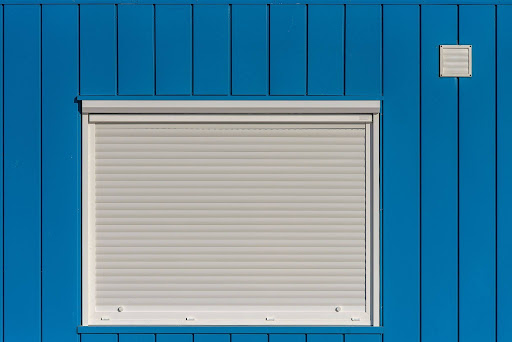
Rolling shutters, sometimes called roll-up or roll-down shutters, live in a housing installed above the window and drop down over the opening like a small garage door. Higher-end versions are motorized, meaning you can close the entire house with the push of a button from inside.
Roll-downs offer the strongest storm protection in the shutter category. They also deliver serious daily-use benefits (privacy, security when you’re away, sound dampening, heat control) and they qualify for some of the best wind mitigation insurance credits available. They’re also the most expensive shutter option.
Bahama Shutters
Bahama shutters are hinged at the top of the window and prop out at an angle on adjustable arms, creating a permanent awning-style look that’s iconic in coastal architecture. When a storm approaches, you drop them flat against the window and secure them.
Bahamas are the choice when curb appeal matters. They give a home a distinct Old Florida or Caribbean feel, they provide daily shade that reduces indoor temperatures, and they double as storm protection. The catch is that they only cover the window they’re mounted to (you can’t run them across a sliding glass door), and the angle they sit at can block some of the outward view.
Colonial Shutters
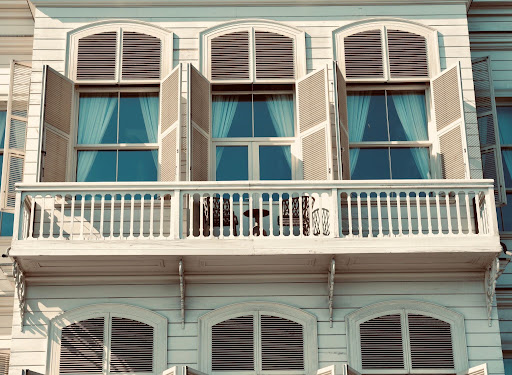
Colonial shutters are the classic two-panel design hinged on either side of the window, folding closed like doors when a storm approaches. When open, they sit flat against the wall and give a home a traditional, dressed-up appearance similar to what you’d see on historic homes throughout the South.
Colonials are popular for their looks. They give a home consistent aesthetic character whether or not a storm is coming, and they’re often the least visually intrusive of the permanent shutter options. Like Bahama shutters, they work on a per-window basis and aren’t a good fit for very wide openings.
Storm Panels
Storm panels are removable rigid panels (aluminum, steel, or clear polycarbonate) that mount to pre-installed tracks or bolts around a window when a storm approaches. They’re the least expensive form of storm protection, they store flat in a garage between seasons, and they can be installed on virtually any opening.
The tradeoff is labor. Panels have to be dug out, carried, mounted, and secured before every storm, which becomes a real problem if you’re in your 70s, live alone, or aren’t home when a storm approaches. For a snowbird or second-home owner, panels can also mean asking a neighbor to close up your house every time a system heads for the Gulf.
Clear polycarbonate panels are worth mentioning separately. They cost more than aluminum, but they let light through when deployed, meaning your home isn’t pitch dark for the 12 hours a storm takes to pass.
Hurricane Screens (Retractable and Fixed)
The newest category uses engineered fabric panels rather than rigid shutters. Products in this space can be manual roll-down screens, retractable motorized screens, or fixed panel systems, all engineered to withstand hurricane-force winds and impact debris when properly deployed.
Hurricane screens are particularly popular for lanais, pool cages, and large openings that would be impractical to protect with rigid shutters. They’re lighter than aluminum panels, they don’t create the visual bulk of accordion or Bahama shutters, and higher-end retractable versions can be motorized for one-touch deployment.
The trade-off is the cost per square foot, which is generally higher than aluminum panels. That said, retractable screens are increasingly seen as the best combination of daily-use convenience (they can double as sun and privacy screens for a lanai year-round) and storm-season protection.
Combining Interior and Exterior Solutions
Most homes around here end up with a combination of window treatments, not a single answer. A typical setup might look like this: plantation shutters or blinds inside for daily light control and aesthetics, accordion or roll-down shutters (or retractable screens for lanais) outside for storm protection.
That two-layer approach works because the products do different jobs. Interior treatments handle the everyday. Exterior treatments handle the two or three times a year (or once every few years, if you’re lucky) when a named storm heads for the Gulf.
The one product that can do both jobs is an impact-rated window, which is a laminated glass system engineered to withstand hurricane-force debris without breaking. Impact windows eliminate the need for exterior shutters and let you rely on interior treatments for daily use. They’re expensive, but they qualify for the strongest wind mitigation credits. For many homeowners, they’re the ideal long-term answer.
How to Choose What’s Right for Your Home
The right combination depends on a few factors: how close you are to the coast (which affects wind zone requirements), your budget, whether you’re home year-round or split time elsewhere, how much you value curb appeal versus deployment convenience, and what your insurance carrier will credit you for.
If storm-season deployment is your main concern, accordion or roll-down shutters are the fastest to close. If cost is the deciding factor, storm panels get you code-compliant for the lowest price. If curb appeal matters, Bahama or Colonial shutters look intentional whether or not they’re deployed. If you don’t want to think about storms at all, impact windows plus interior treatments is the cleanest answer.
Shutters239 has been protecting Southwest Florida homes for more than 40 years and installing every category of storm shutter made. If you’re not sure what your home actually needs, or if you’re trying to figure out whether to invest in shutters now or upgrade to impact windows later, we’re happy to come out to your property, inspect your existing openings, and give you honest options. Free consultations, no pressure, and we offer discounts for veterans, teachers, and first responders as a thank-you for what you do.