
| Time to Read | 8 minutes |
| What You’ll Learn | How interior shutters and blinds differ in light, privacy, durability, and cost, which one suits each room in a coastal home, and where storm protection fits into the picture. |
| Next Steps | Work out which rooms need which product, then book a walkthrough to measure and price the openings. |
Shutters and blinds cover the same window and solve broadly the same problem, which is why they get compared so often. The comparison is worth making carefully, because in a hot, humid, high-UV climate the two products age very differently. A choice that would be a coin flip in Ohio is not a coin flip here.
This guide covers what each product does, how they hold up locally, and which one belongs in which room. It also covers something the comparison usually leaves out: neither one protects your home from a storm.
What Each Product Actually Is
Interior shutters
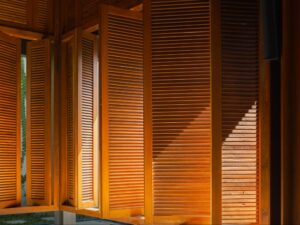
Rigid louvered panels set into or over the window frame, hinged to swing open, with slats that tilt on a rod or a hidden mechanism. They are built to the opening and installed as a fixed part of the window rather than hung from it. Most are made from poly resin or engineered composite. Hardwood versions exist and are the most expensive option.
Blinds
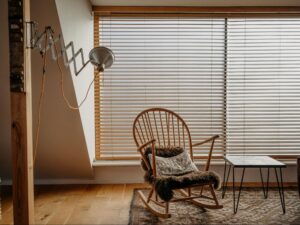
Horizontal or vertical slats suspended on cords, tapes, or a wand, which raise, lower, and tilt. Common materials are aluminum, vinyl, faux wood, and real wood. Blinds are manufactured to fit the window rather than being built into it, which is why they cost less and do not last as long.
Head to Head
| Interior Shutters | Blinds | |
|---|---|---|
| Light control | Precise, and the frame blocks light leaking around the edges | Good on the slats, but light leaks at the sides and through cord holes |
| Privacy | Very good, with the option to tilt for light while staying private | Good when closed, though slats can gap over time |
| Humidity performance | Poly and composite are unaffected | Real wood warps and discolors; faux wood and aluminum hold up |
| UV performance | Poly holds color for years under direct sun | Vinyl slats can yellow and grow brittle in a sun-facing window |
| Typical lifespan | 15 to 25 years or more | 3 to 8 years for most residential blinds |
| Cleaning | Wipe the louvers; no cords to tangle | Slat by slat, and cords collect dust |
| Upfront cost | Significantly higher | Low to moderate |
| Cost over 20 years | Usually lower, because you buy them once | Higher once you count two or three replacements |
| Effect on resale | Reads as a built-in improvement and usually stays with the home | Treated as a furnishing, with little effect on value |
| Insulation | Solid panels add a modest thermal buffer at the glass | Minimal, apart from cellular shades |
The short version: blinds win on upfront cost and nothing else. Shutters win on longevity, humidity tolerance, appearance, and cost per year of service. Whether that makes shutters the right answer depends entirely on the room and how long you plan to own the home.
Room by Room
Rather than choosing one product for the whole house, most homeowners get a better result and a better price by matching the product to the opening.
Living areas and great rooms
Usually shutters. These are the windows guests see and the ones you look at every day. Shutters read as architecture rather than as window covering, and the large openings common in this style of home are where the difference is most obvious.
Bedrooms
Either, depending on how you sleep. Shutters give better edge-to-edge darkness because the frame seals the perimeter. If you want a genuinely dark room, that matters more than expected. Blackout roller shades are another serious option, and blinds alone rarely get a bedroom truly dark.
Kitchens and bathrooms
Poly shutters or faux wood blinds. Steam, splashes, and cleaning products rule out real wood in both rooms. Poly shutters wipe clean and aren’t affected by moisture. Faux wood blinds are a reasonable budget alternative in a small window.
Sliders and lanai-facing openings
Vertical blinds or a track shutter system. Wide sliding openings are where blinds still make a strong case. A full-height shutter across an eight- or ten-foot slider is expensive and can be awkward to operate daily. Vertical treatments handle the width and the traffic better.
Rentals and seasonal properties
Lean toward blinds, with one exception. In a property you do not live in year-round, replaceable is a feature. The exception is a property that sits closed and shuttered for months, where poly shutters handle long unoccupied stretches of heat and humidity better than anything on a cord.
The Climate Factor
This is where the general advice you find online stops applying, because most of it is for a temperate climate.
Humidity is the deciding factor for wood. Real wood blinds and hardwood shutters absorb moisture. In a house that runs open doors, high humidity, or seasonal air conditioning cycles, they warp, swell, and eventually stop sitting square. Poly and composite do not have that failure mode at all. This single point rules out a whole product category for most homes here.
UV exposure is more punishing than most people budget for. A south or west-facing window here gets sun intensity that will yellow cheap vinyl slats and fade fabric within a few seasons. Ask what UV rating you are getting, not just what the slat is made of.

Salt air reaches the interior. Near the water, salt works into mechanisms. The cords, tilt rods, and lift hardware on blinds are the parts that corrode and stick. Shutters have fewer moving parts and less to go wrong.
Sun-facing rooms need a heat strategy, not just a light strategy. Any interior treatment stops light after the sun has already passed through the glass, which means the heat is already in the room. If a west-facing room is uncomfortable in the afternoon, the fix is exterior, not interior. That is worth knowing before you spend on interior treatments expecting them to solve a heat problem.
What Neither One Does
Interior shutters and blinds are window treatments. They manage light, privacy, and appearance. Neither offers protection during a storm, and this is worth being blunt about because the shared vocabulary genuinely confuses people.
The word shutter covers two entirely separate products. Interior plantation shutters sit inside the window and control light. Storm shutters mount on the outside of the building and are engineered and rated to stop wind-borne debris from breaking the glass. Interior shutters have no rating, no engineering standard, and no protective function in a storm.
This matters because a broken window during a hurricane is not just a broken window. Once the envelope is breached, pressure builds inside the house and pushes upward and outward against the roof and walls. Preventing that breach is the entire point of exterior protection.
So the honest framing is that these are two separate decisions, not one:
- Interior treatments: shutters or blinds, chosen room by room for light, privacy, and appearance.
- Exterior protection: rated storm shutters, screens, or panels, chosen by opening for wind and debris resistance.
If you still haven’t sorted out the exterior side, our product range covers every category, from roll-downs and accordions through storm panels and roll-down screens for lanais and large openings.
One product does bridge the two conversations. Bahama and Colonial shutters mount on the exterior, are available in hurricane-rated versions, and provide shade and curb appeal year-round rather than only when a storm is coming. If you like the look of shutters and you also need protection, that is the place where the two goals meet.
You can see the range on our Bahama and Colonial shutters page.

How to Decide
The following four questions get most people to an answer.
- How long will you own the home? Under five years, blinds are the rational choice, and you will not recover the difference. Over ten years, shutters are cheaper per year, and you get the better product the whole time.
- How much direct sun does the window get? Heavy sun exposure pushes you toward poly shutters or a high-quality faux wood, and away from vinyl and real wood entirely.
- How wide is the opening? Standard windows suit either. Wide sliders and lanai openings usually favor a vertical or track solution on cost and daily usability.
- Is this room a showpiece or a utility space? Spend on the rooms people see and where you spend your time. Guest rooms, laundry rooms, and closets do not need the premium product, and mixing is normal rather than a compromise.
Where to Start
Most homes end up mixed, and that is the right outcome rather than a failure to commit. Shutters in the rooms that matter, blinds where they do not, and a separate plan for the exterior openings that actually need protecting.
We have spent decades working on openings across Lee and Collier counties, which means we know how these products age rather than how the catalog says they perform. If you want a straight read on your own windows, get in touch, and we will walk the openings with you. Free consultation, no pressure, and we offer discounts for veterans, teachers, and first responders.